Yes, Phu Quoc is safe for tourists in 2026. That one-word answer is true, but it is also doing more work than it should, since it glosses over the handful of real, specific risks worth knowing before a trip rather than after one.
This guide answers the real question, is Phu Quoc safe for tourists in every situation and not just on an average day, honestly and section by section: what the actual risks are, how solo travelers and families should think about the island differently, what nighttime looks like away from the resorts, and exactly what to do if something does go wrong.
Phu Quoc Safety at a Glance
- Overview: This guide looks at the real risks for tourists in Phu Quoc in 2026, from petty theft and traffic to pricing disputes and emergencies.
- Official rating: The U.S. State Department rates Vietnam at Level 1, “Exercise Normal Precautions,” its lowest advisory tier.
- Main risks: Petty theft, motorbike accidents, stomach upsets and sun exposure are far more realistic concerns than violent crime.
- New in 2026: A Tourism Rapid Response Team now handles pricing disputes, harassment and security issues 24/7.
- Recommended for: Useful for first-time visitors, solo travellers and families planning a relaxed trip.
Is Phu Quoc Safe for Tourists Right Now?
Violent crime against tourists on Phu Quoc is close to nonexistent. Muggings, assaults, and armed robbery are not realistic concerns during normal tourist activity, and the island’s economy depends heavily enough on tourism that keeping visitors safe is a direct local priority.

This lines up with the official picture too: the U.S. State Department rates Vietnam at Level 1, “Exercise Normal Precautions,” its lowest and most favourable advisory tier.
The real risk profile looks like most of coastal Southeast Asia, and none of it is unique to Phu Quoc specifically:
- Petty theft: an unattended phone on a beach towel, a bag left open on a scooter
- Motorbike accidents, especially for first-time riders on unfamiliar roads
- Food-related stomach upsets from unfamiliar street food
- Sun exposure and heat fatigue
Numbeo’s crowd-sourced Crime Index rates Vietnam at 39.71, squarely in the Moderate band, with a 60.29 overall Safety Index, matching that everyday read: manageable with basic awareness, not a genuine high-risk profile.

2026 specifically brought a concrete, verifiable upgrade rather than just a marketing claim: Phu Quoc Special Economic Zone launched a Tourism Rapid Response Team paired with a new Tourism Code of Conduct, handling pricing disputes, service-quality complaints, harassment, and general security issues 24/7, alongside tightened inspection of hotels, homestays, and other tourist accommodation.
None of this makes Phu Quoc a zero-risk destination overnight, but 2026’s answer to “is Phu Quoc safe for tourists” comes with more institutional backup than in past years.
The most common complaint that actually surfaces when researching is Phu Quoc safe for tourists is not violent crime, it is being quoted one price and charged another. Pricing transparency, more than any headline crime statistic, is the real substance behind the question, and it comes down to a handful of recognisable patterns worth knowing before they show up.
- Inflated taxi fares or a menu with no visible prices: ask for a price upfront or screenshot a Grab fare before confirming a ride
- Boat tour operators adding fees after the trip is already booked: book through a hotel or a recognizable platform rather than a stranger on the beach
- Unofficial tour touts around busy beaches and the night market offering trips or rentals priced too good to check: a legitimate operator has a fixed office, a real booking confirmation, and a price matching what a hotel concierge or well-reviewed platform quotes for the same trip
- Walking away from anything that skips all three of the above is rarely a real loss
The real risk is the bill, not the street
The complaint visitors actually run into on Phu Quoc is being quoted one price and charged another, so the most useful safety habit is agreeing a price upfront, or screenshotting the Grab fare, before a ride or meal starts.
For boat trips and rentals, a legitimate operator has a fixed office, a real booking confirmation and a price close to what a hotel concierge quotes; since 2026, unresolved disputes can also go to the 24/7 Tourism Rapid Response Team.
How Do You Travel Smart and Stay Relaxed in Phu Quoc?
Most of what keeps a Phu Quoc trip smooth comes down to a short list of habits rather than constant vigilance. The island rewards ordinary travel-smart behavior rather than demanding anything extreme.

Transportation is the one area worth being deliberate about. Grab operates across the island’s main tourist areas and gives a fixed, transparent fare before the ride starts, removing the negotiation and overcharging risk that comes with flagging down an unmarked taxi.
Renting a scooter is genuinely one of the best ways to see the island independently, but Phu Quoc’s roads mix tourist traffic with local trucks and motorbikes, so a helmet and real caution around unfamiliar intersections matter more here than on a rental car trip back home. That caution holds nationally, not just locally: motorcycles are involved in more than 90% of Vietnam’s road traffic deaths, with 77 million motorbikes registered nationwide.
- Use Grab or a marked taxi brand rather than an unmarked one, especially from the airport or ferry terminal
- Stick to bottled or filtered water; ice at tourist-area restaurants and cafes is generally made from purified water and safe
- Keep bags zipped and valuables out of sight in markets, night markets, and crowded beach areas
- Wear a life jacket on any boat tour or water-sports activity, even a short one
- Photograph your passport and keep a digital copy accessible in case the original is lost
- Pack reef-safe sunscreen and mosquito repellent; sun exposure and dengue risk cause more ruined travel days here than any crime-related concern
None of these habits require paranoia. Most visitors who ask is Phu Quoc safe for tourists before their trip and then follow this same short list of ordinary precautions come back reporting an easy, low-drama holiday rather than a string of near-misses.
Sun and mosquitoes cost more days than crime
Sun exposure and dengue risk cause more ruined travel days here than any crime-related concern, so reef-safe sunscreen and mosquito repellent belong near the top of the packing list.
Transport is the other area to be deliberate about: motorcycles are involved in more than 90% of Vietnam’s road traffic deaths, so a helmet is non-negotiable on a rented scooter, and Grab or a marked taxi is the safer default from the airport or ferry terminal.
Is Phu Quoc Safe for Solo Female Travelers?
Phu Quoc is generally considered safe for solo female travelers, including by women who have written about traveling Vietnam alone specifically. The island’s tourist areas see enough foot traffic, and enough of the local economy runs on tourism, that solo women moving through markets, beaches, and restaurants alone draw little attention compared with some other parts of Southeast Asia.

The same practical habits from the section above apply here with a bit more weight: using Grab rather than flagging an unmarked taxi, keeping a general sense of which streets stay busy after dark, and trusting a gut instinct that something feels off rather than talking yourself out of it.
Anyone specifically researching is Phu Quoc safe for tourists traveling solo should weigh accommodation choice as seriously as any single decision on the trip. A resort with 24-hour reception, on-site dining, and other guests around at most hours offers a genuinely different evening experience than an isolated guesthouse with no one else on the property, particularly for a first solo trip to Vietnam specifically.
Read more: Phu Quoc Solo Travel Guide 2026: Things You Must Know
Where you sleep shapes your evenings
For a first solo trip, accommodation choice matters as much as any single precaution: a resort with 24-hour reception, on-site dining and other guests around at most hours offers a very different evening than an isolated guesthouse with no one else on the property.
Beyond that, the same habits apply with extra weight: use Grab rather than flagging an unmarked taxi, and note which streets stay busy after dark before heading out.
Is Phu Quoc Safe for Families With Young Kids?
Phu Quoc works well for families specifically because the biggest local risks (motorbike traffic, unfamiliar water conditions, sun exposure) are all manageable ones a parent can plan around directly, rather than the kind of unpredictable risk that makes a destination genuinely hard to relax into with kids.

Water safety deserves the most attention of any family-specific precaution. Not every stretch of coastline has visible lifeguard coverage, so a calmer, sheltered beach matters more for young kids than a scenic but exposed one, and swim vests are worth packing or renting for anyone still building water confidence.
Vietnam’s tourist infrastructure generally treats children well, with high chairs, kids’ menus, and a general cultural warmth toward traveling families showing up across restaurants and resorts island-wide, which takes some of the logistical pressure off compared with destinations less used to family travel.

Packing a small first-aid kit with children’s fever medicine and rehydration salts is worth doing too, since finding a specific brand a family trusts is not always guaranteed at every pharmacy on the island.
Is Phu Quoc safe for tourists traveling with young kids specifically also comes down to how much a family needs to leave a chosen base to eat, swim, and stay entertained. A resort with its own beach access, a kids’ pool or supervised activity space, and on-site dining removes several trips off-property a day, each of which is one more moment of navigating unfamiliar traffic or an unfamiliar menu with a tired toddler in tow.
Read more: 15 Things to Do in Phu Quoc with Kids That Parents Should Know for a 2026 Trip
How Safe Is Phu Quoc at Night?
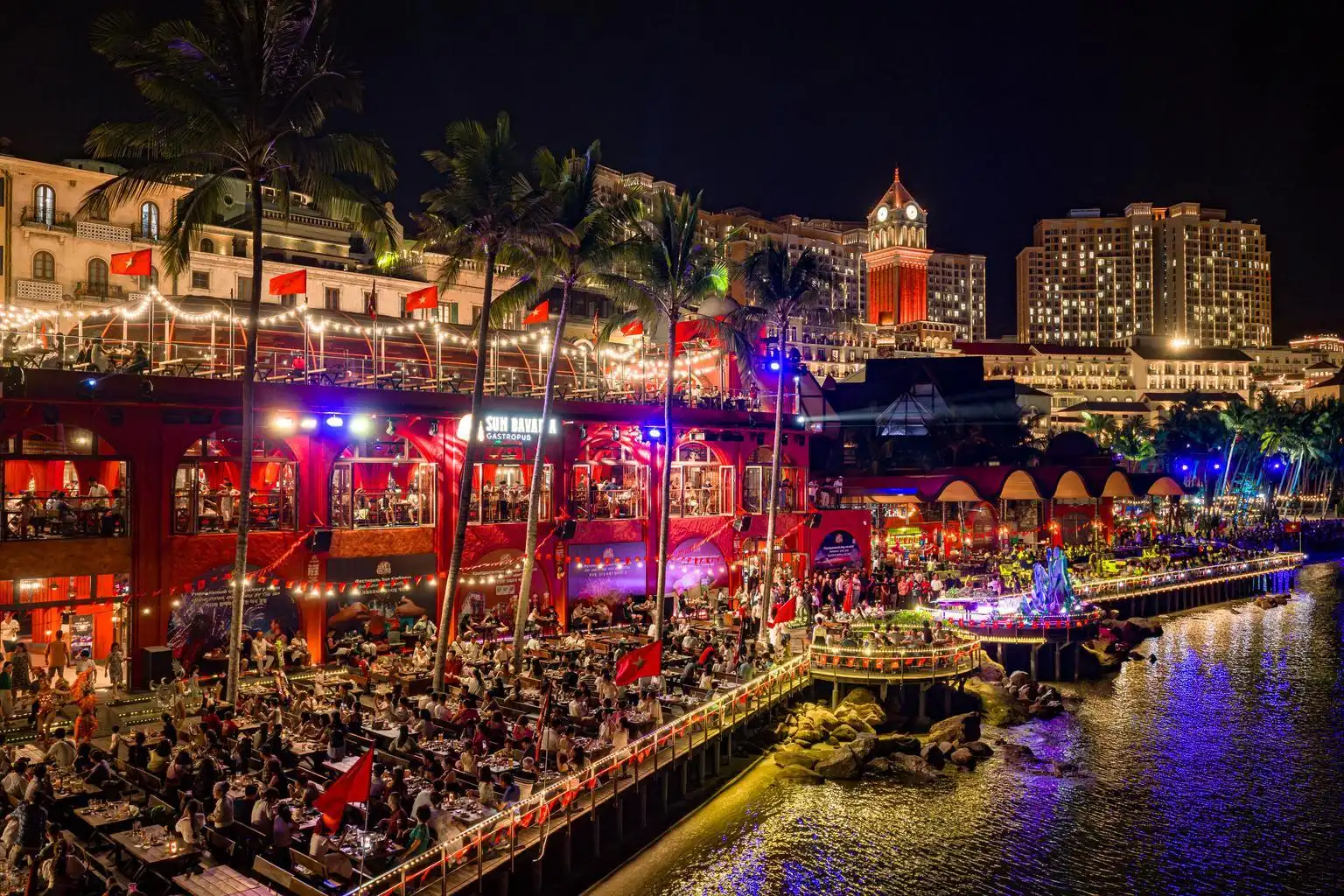
Nighttime on Phu Quoc splits fairly cleanly into two pictures. The island’s main tourist corridors, night markets, and entertainment districts like Sunset Town stay busy, well-lit, and easy to navigate well into the evening, feeling little different from a safe night out anywhere else in coastal Southeast Asia.

National survey data reflects exactly that day-night split: Numbeo’s crowd-sourced index rates “safety walking alone during daylight” in Vietnam at 76.44, High band, against 52.81, Moderate, after dark, the same real gap this guide keeps coming back to, not a Phu Quoc-specific quirk.
The exception is any stretch of beach or unlit road once tourist activity thins out. Walking alone on a dark, empty beach late at night is the one scenario that comes up repeatedly in safety advice here, not because incidents are common, but because nobody is around to notice if something goes wrong.
Sticking to lit paths, traveling with at least one other person late at night, and booking a Grab rather than walking an unfamiliar route back to a hotel all remove most of that risk in one step.
What Should You Do in an Emergency?
Most trips to Phu Quoc never need any of the information in this section, but having it saved before arrival, rather than searching for it mid-emergency, is what actually makes a difference if something does happen. Part of answering is Phu Quoc safe for tourists honestly means acknowledging that a genuine emergency, however rare, deserves a real plan rather than an assumption that it will not happen.
Emergency Numbers and the Tourist Hotline
Vietnam runs a national emergency system, the same numbers everywhere in the country including Phu Quoc, worth saving in a phone before landing rather than looking up under pressure.

- 115: Ambulance / medical emergency
- 113: Police
- 114: Fire department
- 112: General search and rescue (large-scale emergencies)
- Phu Quoc Tourism Rapid Response Team: 24/7 support for pricing disputes, scams, harassment, and general tourist safety issues, reachable through the resort front desk or local tourist information points
For anything short of a true emergency, a resort or hotel front desk is usually the faster first call. Staff who deal with these situations regularly can often resolve a pricing dispute or point toward the right clinic faster than navigating a hotline in an unfamiliar language alone.
Saving the resort’s own phone number as a contact before arrival, not just the emergency numbers above, means it is one less thing to search for if a phone is low on battery or signal is patchy.
Hospitals, Clinics and Pharmacies
Phu Quoc’s medical infrastructure has grown considerably alongside its tourism boom, and the island now has real options for both routine and serious care rather than requiring an evacuation for anything beyond a headache.

| Facility | Location | Best For |
|---|---|---|
| Vinmec Duong Dong International Clinic | 114 Nguyen Trung Truc St, Ward 8, Duong Dong | Closest option for most stays; 6 floors, ~40 rooms covering exams, emergency care, endoscopy, X-ray, lab testing |
| S.O.S. General Clinic | 350 Nguyen Trung Truc St, Duong Dong | Smaller general clinic in the same medical corridor; non-urgent care |
| Vinmec International Hospital Phu Quoc | Bai Dai, Ganh Dau (island’s northern tip) | JCI-accredited, 24/7 emergency care, MRI/CT imaging; the right call for anything genuinely serious, considerably further out |
Pharmacies are easy to find throughout Duong Dong town, several within a short walk of each other along Nguyen Trung Truc Street and 30 Thang 4 Street, generally stocked with the same over-the-counter basics (pain relief, cold and stomach medicine) found at any pharmacy chain, and staff in the more tourist-facing ones usually manage at least basic English for simple requests and dosage questions.
No vaccinations are mandatory for entry to Vietnam for most travelers (a Yellow Fever certificate is the one exception, required only when arriving from a Yellow Fever risk country), though routine vaccinations plus hepatitis
A coverage are commonly recommended by travel clinics ahead of a Southeast Asia trip. As of 1 July 2026, Vietnam also requires a health declaration for all foreign nationals entering the country, completed online within 7 days before travel, worth building into pre-trip planning alongside the usual visa and insurance checklist.
How to Pick a Safe, Hassle-Free Base
Where a trip starts matters more for peace of mind than most travelers expect. A base that handles the logistics automatically, airport pickup, on-site dining, staff who can point toward the right clinic or answer a safety question directly, removes a meaningful share of the small frictions that otherwise pile up on a first trip to an unfamiliar island.

Premier Residences Phu Quoc Emerald Bay, managed by Accor on Khem Beach, is built around exactly that kind of hassle-free arrival. Being part of a global hospitality group means the resort operates to a consistent set of service and operational standards regardless of which country a guest last stayed in, a genuinely reassuring detail for a first-time visitor to Vietnam who has no local frame of reference yet for what “normal” should look like.

That reassurance is backed by more than a brand name. The resort holds a 4.7 out of 5 Google rating from more than 2,000 reviews, alongside the 2025 TripAdvisor Travelers’ Choice Award, Asia’s Leading Family Beach Resort at the 2025 World Travel Awards, and Best Resort Service (Vietnam) at the 2026 Haute Grandeur Global Awards, genuinely useful signals on an unfamiliar island.

The trip’s most exposed moment, arriving at an unfamiliar airport and needing transport, is handled directly: the resort offers a complimentary airport shuttle, about 25 minutes away, booked in advance rather than negotiated on arrival. That single detail removes the exact scenario (a tired traveler haggling over an unmarked taxi fare) behind most overcharging complaints from first-time visitors.

For a family traveling with young kids specifically, the Apartment 2 Bedrooms gives the group its own contained space, over 80 sqm with a separate living room and its own balcony, a genuinely simpler layout for keeping an eye on kids than trying to manage a family across two separate standard rooms down the hall from each other.

Kids Club rounds out the family-safety picture further: a supervised activity space running 8:00 to 18:00 daily with a ball pit, a multi-game area, painting and drawing, and construction toys and puzzles, giving parents a genuinely safe, staffed space to leave younger kids for an hour without needing to negotiate childcare with a stranger in an unfamiliar country.

Not needing to leave the property after dark removes another layer of the nighttime risk covered earlier in this guide. Herring Bar sits right on the sand at Khem Beach, open daily from 10:00 to 23:00, a beachfront bar with its own live BBQ station grilling fresh seafood and meat in full view of the tables, the namesake Herring Salad and a Grilled Seafood Platter among the signature dishes.

A family or solo traveler who would rather not navigate an unfamiliar road after dark can eat a full dinner and watch the sunset without a single trip off-property, its open-air, well-lit setting exactly the kind of well-populated evening spot this guide’s night-safety section recommends.

For anyone who prefers to keep a familiar workout routine while traveling rather than exploring an unfamiliar running route alone at dawn or dusk, the resort’s Fitness Centre offers a straightforward, on-property alternative, open with modern equipment for guests who would rather train somewhere they already know the layout of.

Cash-handling is one small but real friction on any first trip abroad, and the resort’s Resort Credit offer sidesteps it directly: pre-purchase credit toward food, beverage, spa, and wellness activities at a bonus rate, for example roughly 2,000,000 VND paid upfront returning about 2,200,000 VND in usable credit, scaling up to a larger bonus at higher amounts. Confirm the current bonus tiers directly with the resort before booking, since offer terms shift over time.

Loading credit onto the room account ahead of arrival also means fewer small on-the-spot cash transactions across the stay, one less moment where an unfamiliar currency and an unfamiliar exchange rate could lead to a genuine, if minor, overcharge going unnoticed until checkout.

Booking any island-hopping trip, Hon Thom Cable Car ticket, or day tour through the resort’s own front desk also closes off the unofficial tour tout risk covered earlier in this guide: a real confirmation and a price agreed in advance, rather than a verbal offer negotiated on the beach with no paper trail.
The same front desk can help translate or clarify anything else that comes up mid-trip, from a pharmacy run to a question about a taxi fare, without needing to navigate the language barrier alone.
Detailed Information:
- Address: Khem Beach, Phu Quoc Special Zone, An Giang Province, Vietnam.
- Phone Number: +84 297 3927 777.
- Reference Price: From approximately $110 USD per night, depending on room type and season. (Rates are for reference only and may vary).
- Google Review: 4.7 out of 5 (based on over 2,000 reviews).
Read more: Where to Stay in Phu Quoc in 2026?
Conclusion
Phu Quoc is safe for tourists in 2026 for the vast majority of visitors, provided the same ordinary travel-smart habits that apply anywhere get applied here too: trusted transport, sensible nighttime choices, and a bit of planning around water and sun. None of the real risks covered in this guide require an experienced traveler to manage well, and a first-time visitor who reads this once before landing should feel just as prepared as someone on their fifth trip to the island.
Reach out to Premier Residences Phu Quoc Emerald Bay directly to book a hassle-free, well-supported base and get a straight, honestly-researched answer, backed by this guide, to is Phu Quoc safe for tourists before your own trip begins.